If you’ve been searching for the answer to How big do Great Danoodles get?, you’re probably already considering bringing one of these impressive designer dogs into your life. The Great Danoodle is a cross between a Great Dane and a Poodle, two breeds that are very different in size but both known for intelligence, loyalty, and personality.
If you’re seriously considering adding one of these gentle giants to your family, you can also learn more about responsible breeding and available puppies here: Great Danoodle Breeder
Because of that mix, Great Danoodles can vary quite a bit in size—but one thing is certain: they are big, often very big. In this guide, we’ll break down everything you need to know about their size, growth stages, influencing factors, and what to expect if you’re planning to own one.
What Is a Great Danoodle?
Before diving into How big do Great Danoodles get?, it helps to understand what they actually are.
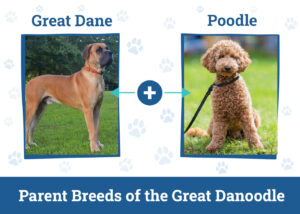
A Great Danoodle is a hybrid (often called a “designer dog”) created by crossing a:
- Great Dane – one of the tallest dog breeds in the world
- Standard Poodle – known for intelligence and hypoallergenic coat traits
The goal of this mix is to combine the Great Dane’s gentle giant personality with the Poodle’s intelligence and lower-shedding coat.
The result? A dog that is affectionate, smart, and yes—very large.
So, How Big Do Great Danoodles Get?
Let’s get to the main question: How big do Great Danoodles get?
On average, a fully grown Great Danoodle can reach:
- Height: 24 to 32 inches (sometimes taller)
- Weight: 75 to 140 pounds (and occasionally even more)
However, these numbers are not fixed. Because Great Danoodles are mixed breed dogs, their size depends heavily on genetics. Some may take after the Great Dane parent and grow extremely tall and heavy, while others may lean more toward the Standard Poodle side and stay slightly smaller.
Still, most Great Danoodles end up being large to giant-sized dogs.
You can also follow our latest updates, available puppies, and behind-the-scenes stories on Instagram at @greatdanoodlebreeder
Growth Stages of a Great Danoodle
1. Puppy Stage (0–6 months)
- Weight: ~10–45 lbs (4.5–20 kg)
- Rapid growth
- Noticeable size changes every few weeks
- Very playful and clumsy
At this stage, Great Danoodle puppies grow extremely fast. Even within a few weeks, you’ll notice clear changes in height and body shape.
2. Adolescence (6–12 months)
- Weight: ~45–90 lbs (20–41 kg)
- Height increases quickly
- Muscle development begins
- Already looks like a big dog, even though still growing
This is the “awkward teen” phase where they may look nearly adult-sized but are still filling out and gaining strength.
3. Adult Stage (12–24 months)
- Weight: ~75–140 lbs (34–64 kg)
- Full height reached
- Weight and body structure continue to fill out
- Fully mature personality
By this stage, you finally see the true answer to How big do Great Danoodles get?—they’ve reached their full giant, powerful, yet gentle build.
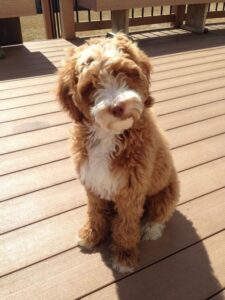
Factors That Affect Their Size
Genetics
Genetics is the single most important factor when answering How big do Great Danoodles get?. Because this breed is a cross between a Great Dane and a Standard Poodle, puppies can inherit very different growth patterns depending on which parent they take after more.
- If a puppy leans more toward the Great Dane side, they are more likely to reach the upper end of the size range, often growing up to 120–140+ lbs (54–64+ kg) and standing closer to 30–32 inches tall.
- If they inherit more traits from the Standard Poodle side, they may stay more moderate in size, typically around 75–100 lbs (34–45 kg) and slightly shorter in height.
Even within the same litter, size differences can be quite noticeable due to this genetic variation.
Gender
Gender also plays a clear role in determining How big do Great Danoodles get?
- Males are usually larger, often reaching 100–140 lbs (45–64 kg) and standing taller with a more muscular frame.
- Females are generally smaller and lighter, typically ranging from 75–110 lbs (34–50 kg) with a more refined body structure.
While both are still large dogs, males tend to appear more “giant breed” in overall presence, while females are slightly more compact and easier to manage physically.
Diet
Nutrition during puppyhood and adolescence has a direct impact on how well a Great Danoodle reaches its full genetic potential.
- A well-balanced, large-breed diet supports steady growth toward the higher end of the range (up to 140 lbs / 64 kg).
- Poor nutrition or inconsistent feeding can result in slower growth, with some dogs staying closer to 70–90 lbs (32–41 kg) and not fully developing their frame.
It’s important not to overfeed either, as excessive weight gain can stress joints without improving healthy height or structure.
Exercise & Health
Exercise and overall health don’t necessarily make a Great Danoodle “bigger,” but they strongly influence how their body develops and how their size presents.
- Regular exercise helps build lean muscle mass, making them appear fuller and more powerful within their natural weight range.
- Healthy joint development allows them to safely reach their full height of 24–32 inches, especially during growth phases.
- On the other hand, lack of movement or joint issues can limit mobility, causing them to stay underdeveloped in muscle tone and sometimes fall on the lower end of the weight range (75–90 lbs / 34–41 kg).
In short, exercise and health don’t change their genetic ceiling, but they determine how close they get to it.
Comparing Great Danoodles to Other Dogs
Understanding How big do Great Danoodles get? becomes much clearer when you compare them to other popular dog breeds. Because Great Danoodles sit between a giant breed (Great Dane) and a large working breed (Standard Poodle), their size range overlaps with several common dogs—but often exceeds them in both height and weight.
Larger than Golden Retrievers
Golden Retrievers are already considered large family dogs, typically weighing around 55–75 lbs (25–34 kg) and standing about 21–24 inches tall.
In comparison, Great Danoodles are noticeably bigger in almost every dimension:
- Weight difference: Great Danoodles can be 20–70+ lbs heavier
- Height difference: Often 3–8 inches taller at the shoulder
- Body structure: More elongated and leaner, especially if they inherit Great Dane traits
Even a smaller Great Danoodle will usually appear more imposing than a fully grown Golden Retriever due to longer limbs and a deeper chest.
Often bigger than Labradors
Labrador Retrievers are one of the most common reference points for size comparison, usually weighing 55–80 lbs (25–36 kg) and standing around 21–24.5 inches tall.
Great Danoodles frequently surpass them in both height and overall mass:
- Many Great Danoodles start matching Labrador size by 6–8 months of age
- As adults, they often exceed Labradors by 20–60 lbs (9–27 kg)
- Their taller frame gives them a more “giant breed” appearance even when weights are closer
While Labradors are stocky and muscular, Great Danoodles tend to be taller, leggier, and more stretched in proportion.
Can approach Great Dane size depending on genetics
This is where things become especially interesting when discussing How big do Great Danoodles get?
Because one parent is a Great Dane, some Great Danoodles—especially those with strong Dane genetics—can grow surprisingly close to true Great Dane dimensions:
- Height: Can reach 28–32 inches or more at the shoulder
- Weight: Some individuals may exceed 120–140 lbs (54–64+ kg)
- Build: Deep chest, long limbs, and a narrow waist similar to Great Danes
However, most Great Danoodles do not fully match the extreme size of pure Great Danes, which can reach up to 175 lbs (79 kg) or more. Instead, they often fall slightly below that range while still maintaining an impressive giant-dog presence.
Final Thoughts: How Big Do Great Danoodles Get?
Most Great Danoodles grow into large to giant dogs, typically weighing between 75–140 pounds and standing 24–32 inches tall.
They are not just big in size, but also big in personality—gentle, affectionate, and loyal companions for the right home.